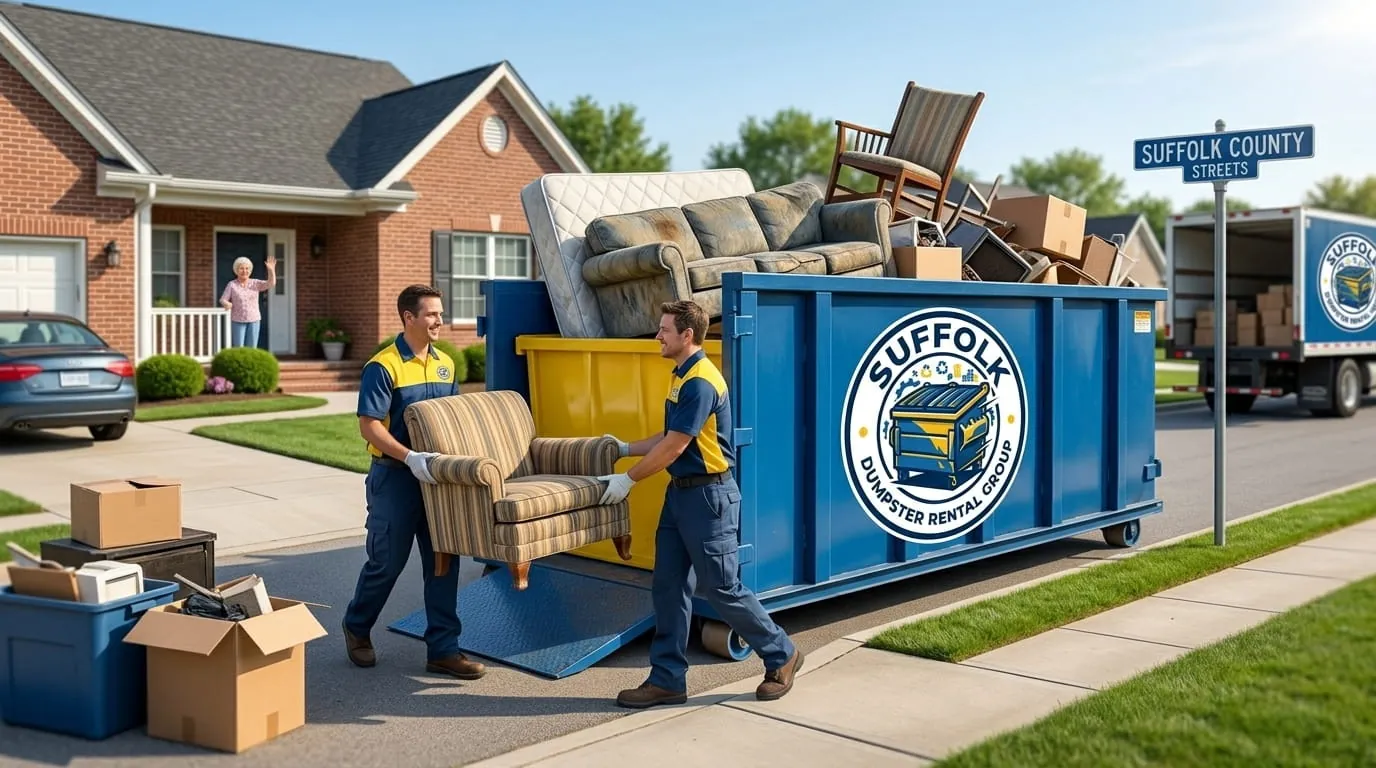
Every full-house cleanout I've ever helped with started the same way: somebody stands in the doorway of a packed garage, sighs, and says "I don't even know where to start." That feeling is normal. The trick isn't willpower. It's a plan that breaks the whole house into small, finishable jobs so you're never staring down the entire project at once.
I've been renting dumpsters to Suffolk and Hampton Roads families for years, and I've watched what separates a smooth cleanout from a miserable one. It comes down to two things: working room by room, and having somewhere to put the junk before you lose your nerve. This is the checklist I give people when they call. Print it, tape it to the fridge, and knock it out one room at a time.
Before You Touch a Single Box: Set Up Your Staging Zones
Don't start pulling stuff out of closets until you've decided where it goes. The number one reason cleanouts stall is that people create a giant pile in the living room, get overwhelmed, and quit. Set up four staging zones first, and label them so nobody has to ask.
- Keep — goes back into the house, in a better spot than before.
- Donate — usable clothing, furniture, kitchenware, toys, books.
- Sell — anything worth more than about twenty bucks and easy to photograph.
- Toss — broken, stained, expired, or nobody-would-take-it.
The garage or driveway usually works best as your sorting hub, especially if that's where your dumpster is parked. One rule that saves marriages: handle each item once. Pick it up, decide, put it in the right zone, walk away. No "maybe" pile. Maybe piles are just toss piles that waste your weekend.
Kitchen: Start Here to Build Momentum
I always tell people to start in the kitchen even though it isn't the biggest job. It's fast, the decisions are easy, and finishing one room early gives you the momentum to tackle the hard stuff. Nobody gets emotional about a warped baking sheet.
What to pull out
- Expired pantry goods, spices older than two years, mystery freezer bags.
- Duplicate gadgets — you do not need three spatulas and two can openers.
- Chipped mugs, mismatched lids, plastic containers missing their partners.
- Small appliances you haven't plugged in since you moved in.
Working appliances and unopened, unexpired food should go to donation, not the dumpster. A dented but functional slow cooker is exactly what a thrift store wants. Broken glass and ceramics go straight in the trash, wrapped so nobody gets cut hauling the bag.
Bedrooms and Closets: Where the Real Volume Hides
Closets are deceptive. They look small, but a single overstuffed bedroom closet can produce more bags than an entire kitchen. This is where most cleanouts generate their biggest pile, so give it real time.
The clothing test
If it doesn't fit, you haven't worn it in a year, or you'd be embarrassed to be seen in it, it goes. Stained and torn clothing is toss. Everything else that's clean and wearable is donate — there's steady demand for used clothes across Hampton Roads. Shoes with life left in them, belts, bags, and coats all move fast at donation centers.
Under the bed and top shelves
This is graveyard territory. Old bedding, packaging you kept "just in case," broken hangers, boxes you never unpacked from the last move. Be honest about the unpacked boxes. If you haven't needed it in a year, you won't miss it.
The Garage: Budget Extra Time Here
The garage is the room that eats weekends. Half-empty paint cans, dried-out chemicals, warped plywood, bikes nobody rides, and the tangle of extension cords in the corner. Give yourself a full day, and pace it.
A few local rules matter here. Paint, motor oil, pesticides, and other household hazardous waste cannot go in a dumpster — that's true for every dumpster company, not just us, and it's a state regulation. The Southeastern Public Service Authority (SPSA) runs household hazardous waste collection for the region, and the City of Suffolk holds periodic HHW events. Set those items aside in a separate box so they don't accidentally end up in the container.
- Scrap wood, old lumber, and broken furniture — dumpster.
- Rusted tools and dead power equipment — dumpster (drain the fuel first).
- Working tools and yard gear — sell or donate.
- Tires — most landfills charge a separate fee; ask us and we'll tell you where they go.
Attic and Storage Shed: The Long-Forgotten Zone
Attics and sheds are where things go to be forgotten. Christmas decorations from two houses ago, water-damaged boxes, insulation scraps, a shed full of pots and half a bag of concrete that set solid years back. Wear gloves and a mask up there — attic dust and old fiberglass are no joke, and Tidewater summer heat turns an attic into an oven by ten in the morning. Work these spaces early in the day.
Most of what comes out of an attic is toss. Cardboard degrades, fabric gets musty, and anything that's been through a Virginia summer of humidity is usually past saving. Don't agonize. If it's been up there five years untouched, it earned its spot in the dumpster.
Picking the Right Dumpster Size for a Full Cleanout
This is the question I get most, and the honest answer depends on how much house you're clearing. Here's how I size it for people:
- 10 yard — a single room, a small condo, or a focused garage-only job.
- 15 yard — two or three rooms plus a closet purge, an average townhouse.
- 20 yard — the workhorse for a whole-house cleanout. Most single-family homes in Suffolk land here.
- 30 yard — large homes, estate cleanouts, or when you're also clearing a full garage and shed.
For a typical family doing a genuine top-to-bottom cleanout, the 20 yard dumpster is the sweet spot. It holds roughly ten pickup-truck loads, the walls are low enough to toss bags over without a ladder, and it fits on a standard driveway. People consistently underestimate their own volume — when you're on the fence between two sizes, go bigger. Paying a little more for one container beats paying for a second haul because you ran out of room on Sunday afternoon. You can see the full lineup on our residential dumpster rental page.
One loading tip that actually matters: break down boxes and furniture flat, and load heavy flat items first along the bottom. Air is the enemy. A dumpster packed loose fills up at half the capacity of one loaded with a little thought.
A Realistic Weekend Timeline
You don't have to do this all at once, but a focused weekend with a dumpster in the driveway is how most people finish. Here's a pace that works:
- Friday evening — set up your four staging zones, gather bags, gloves, and a box cutter. Do the kitchen. It's a warmup.
- Saturday morning — bedrooms and closets while your energy is high and your decisions are sharp.
- Saturday afternoon — garage, when you don't mind the heat and the mess.
- Sunday morning — attic and shed early, before the heat sets in.
- Sunday afternoon — final load-out, donation run, and a last walk-through.
Ready to book a container before the weekend fills up? Call Suffolk Dumpster Rental Group at (757) 922-0487 and we'll get the right size dropped in your driveway.
Where to Donate in Suffolk and Hampton Roads
Keeping usable stuff out of the dumpster is good for your conscience and your neighbors. The area has solid options:
- Habitat for Humanity ReStore — furniture, appliances, building materials, cabinets. They'll often pick up larger items.
- Goodwill and The Salvation Army — clothing, housewares, small furniture, books. Locations throughout Suffolk, Chesapeake, and Portsmouth.
- Union Mission and local church thrift stores — clothing and household goods, and the money stays local.
- Buy Nothing groups and Facebook Marketplace — for that specific item somebody nearby actually wants.
Call ahead about large furniture. Most centers can't take mattresses, ripped upholstery, or anything with a strong odor, and it's frustrating to load a couch just to be turned away at the door.
A Note on Military PCS Moves
Hampton Roads runs on the military calendar, and PCS season means a lot of cleanouts on a hard deadline. If you're clearing out before a move, a few things are worth knowing. Your government weight allowance means it almost never makes sense to move broken furniture, old mattresses, or a garage of accumulated junk across the country — you're better off tossing it here and starting fresh.
The move timeline is tight, so book your dumpster early; PCS season stretches every rental company in the region thin. And if you're doing a whole-house clear-out on top of packers coming through, a 20 or 30 yard container parked in the driveway gives you somewhere to purge everything the movers won't touch. We work with a lot of Navy and Air Force families around Suffolk and we know how the timeline works — tell us your report date and we'll schedule around it.
Finish Strong
A full cleanout isn't complicated, it's just big. Break it into rooms, sort as you go, keep your hands moving, and give yourself somewhere to put it all. Do that, and a house that felt impossible on Friday is clear by Sunday night. When you're ready to line up a container, reach out to us or call and we'll walk you through sizing in about five minutes. No pressure, no upsell — just the right box in your driveway when you need it.

Founder, Suffolk Dumpster Rental Group — sharing straight advice from more than 15 years of local hauling experience.