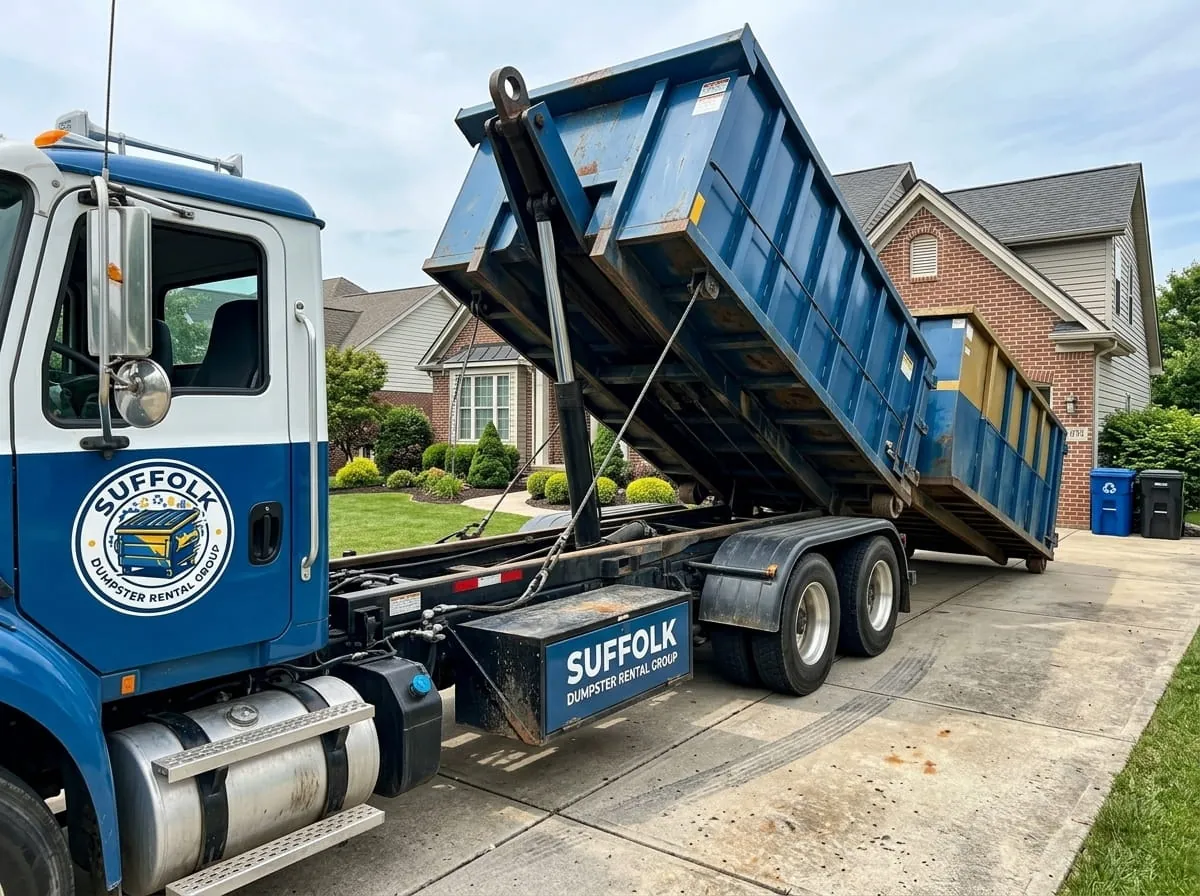
Construction debris is heavier, sharper, and more regulated than anything else that lands in a dumpster. A single kitchen remodel throws off drywall dust, splintered lumber, old tile, and a mess of nails that will flatten a tire in a heartbeat. Do it wrong and you get a red-tagged job site, a surprise overage fee, or a load the landfill turns away at the scale house. Do it right and the debris side of your project barely registers. After years of hauling this stuff around Suffolk and the wider Hampton Roads area, here is how we tell crews and homeowners to handle it.
Know Your C&D Waste Before You Toss It
Construction and demolition debris, what the industry shorthand calls C&D, is not one thing. It is a category, and each material inside it behaves differently at the disposal end. Sorting them in your head before the first swing of the sledge saves you money and headaches later.
- Drywall. Light and bulky. It crumbles, it dusts, and gypsum board has its own recycling stream in some facilities because the sulfur content causes problems in wet landfills. Keep it dry if you want it recycled.
- Lumber. Framing scrap, old joists, trim, plywood, OSB. Clean, untreated wood is one of the easiest materials to divert to a recycler or mulch operation. Treated and painted wood is a different animal, more on that below.
- Concrete, brick, and masonry. Heavy. Dense. This is the material that gets people in trouble, because a small pile weighs more than a whole truck bed of drywall.
- Shingles. Asphalt roofing is deceptively heavy once it is stacked. A single square (100 square feet) of tear-off can run 250 to 400 pounds. A full re-roof fills weight before it fills space.
- Siding. Vinyl and fiber cement come off in long pieces. Vinyl is recyclable at the right facility; fiber cement (Hardie board) is dense and sometimes has to go to a lined landfill.
The reason this matters is simple. A dumpster is priced two ways at once: the volume you fill and the weight you put in it. Understand which materials are volume hogs and which are weight bombs, and you will never be blindsided by a bill.
Why Concrete and Masonry Need Their Own Handling
This is the single most common mistake we see. Somebody rents a container for a patio demo, fills half of it with broken concrete, and assumes they are fine because there is space left over. Then the truck cannot lift it, or the load blows past the weight allowance by a ton, and now there is a heavy overage charge on top of the rental.
Concrete, brick, block, and stone are what haulers call clean fill or heavy debris. Most facilities in our area handle them separately from mixed C&D because pure concrete can be crushed and reused as road base and aggregate. That recycling path only works if the load is clean, meaning concrete and masonry with no wood, no wire mesh tangled through it, no trash mixed in.
For any project generating real volumes of concrete, brick, or dirt, the smart move is a dedicated container, usually a smaller 10-yard box rated for heavy material, kept separate from your general debris. Do not try to hide a slab in the bottom of a mixed load. It never saves money, and it often means the whole container gets rejected at the gate. When in doubt, call and tell us what you are tearing out. Our construction dumpster rental service is set up to spec the right box for heavy material so you are not guessing.
Weight Limits Are Not a Suggestion
Every roll-off comes with a weight allowance baked into the price, typically expressed in tons. Go over it and you pay per ton for the excess, because the disposal facility charges us by the scale ticket. Here is the math that trips people up: a 20-yard dumpster might hold 3 tons under its allowance, but 20 cubic yards of concrete weighs somewhere north of 25 tons. You will hit the weight ceiling with the box barely a quarter full.
Roofing is the sneaky one. Homeowners look at a 30-yard container and figure a whole re-roof will swim in it. By volume, sure. By weight, a three-layer tear-off on a decent-sized house can bury the allowance and keep going. If you are doing shingles, size the container for weight and expect to fill it partway.
A few habits keep you on the right side of the scale:
- Load heavy material low and spread it out, never piled in one corner.
- Keep dirt and concrete out of your general debris box unless you have cleared it with your hauler.
- Break down bulky lumber and cabinetry so you use the volume you are paying for instead of tapping out on air pockets.
- Never fill above the top rail. An overloaded box legally cannot be hauled on the road, and we will have to come pull weight before we can take it.
Separating Recyclables Pays Off
You are not required to sort every scrap, but a little separation goes a long way, both for your wallet and for keeping the job compliant. Clean wood, clean concrete, and clean metal all have real recycling value in Hampton Roads. Metal especially. Copper pipe, aluminum flashing, old appliances, and steel framing are worth money at a scrap yard, so pull them before they disappear into a mixed load.
If your project is big enough, running two containers, one for clean recyclable material and one for genuine trash, often lands cheaper than one giant mixed box that gets charged at the highest tipping rate. On commercial jobs this is frequently not optional. Many general contractors and municipalities in Virginia now require construction waste diversion documentation, and you cannot prove diversion if everything went into one bin. Our commercial dumpster rental program handles multi-container setups and the paperwork that comes with them.
Not sure which container fits your demo, or how to keep concrete and general debris separate? Call Suffolk Dumpster Rental Group at (757) 922-0487 and we will spec it out with you before you lift a finger.
Keeping the Job Site Clean and Compliant
A clean site is a safe site and, frankly, a faster one. Debris underfoot causes falls, hides trip hazards, and slows every trade that comes behind you. It also keeps the inspector happy. A few operator habits worth stealing:
- Load as you go. Do not let debris pile up in the work area to be handled later. Later never comes, and the pile always grows.
- Place the container smart. Close to the work, on a firm surface, off soft grass that a loaded box will sink into and rut. In our sandy coastal soils that matters more than people expect.
- Protect the driveway. Plywood under the container contact points prevents cracks in a concrete or asphalt drive.
- Keep hazardous material out. Paint, solvents, adhesives, fluorescent tubes, and asbestos-containing material do not belong in a C&D box, ever. They require separate, permitted disposal.
- Watch the fill line. Anything above the rail has to come off before we roll.
Choosing Dumpster Size: Renovation vs New Build
The right size depends less on square footage than on what kind of work you are doing.
Renovation and remodel
Interior remodels generate a lot of mixed, moderate-weight debris: drywall, flooring, cabinetry, trim, insulation. A single-room bath or kitchen usually fits a 15 or 20-yard box. A whole-house gut, especially with lath and plaster in an older Suffolk home, often needs a 30-yard or a swap-out mid-project. Plaster is heavier than drywall, so factor weight if the house predates the 1950s.
New construction
New builds throw off cleaner, more predictable waste, mostly lumber offcuts, packaging, cardboard, and sheathing scrap. It is bulky but light, which is exactly what the bigger 30 and 40-yard boxes are built for. On a new build the challenge is volume, not weight, so you size up.
Roofing and concrete
These get their own smaller, heavy-rated containers regardless of the project size, for all the weight reasons above. A 10 or 20-yard box built for heavy debris beats stuffing shingles or slab into a general-purpose container.
When you are genuinely unsure, err one size up. A container with room to spare costs far less than a second haul because you undersized the first one.
Coastal Virginia Notes: Flood Demo and Treated Lumber
Living and building around Hampton Roads brings two wrinkles you will not find inland.
Flood remediation demo. After a nor'easter or a hurricane band pushes water into a house, the demo is fast and wet and heavy. Waterlogged drywall, soaked insulation, and swollen subfloor weigh two to three times their dry weight, so a box that looks half full can already be over on tonnage. Gut it to the studs, get it out fast before mold sets, and expect the weight math to work against you. If there is any question about mold-heavy material or contamination, tell us up front so we route it correctly. Speed matters most here, so having the container on site the day you start makes or breaks the timeline.
Treated and marine lumber. Coastal properties are full of pressure-treated decking, dock boards, bulkhead timbers, and older wood that may carry preservatives. Treated lumber is not clean wood. It cannot go to a mulch or wood-recycling stream, and it should never be burned, which releases the chemicals it was treated with. It goes to the landfill as general C&D. The same goes for painted trim from older homes, where lead paint is a real possibility on anything built before 1978. Keep treated and painted wood separate from your clean lumber pile so you do not contaminate a recyclable load.
The Bottom Line
Disposing of construction debris the right way comes down to three habits: know what each material weighs, keep heavy and clean streams separate, and size the container for the job in front of you rather than the one you imagine. Get those right and the debris side of any project runs quiet in the background, the way it should. If you want a second opinion before you start swinging, reach out through our contact page or just pick up the phone. We would rather help you size it right the first time than untangle an overage later.

Founder, Suffolk Dumpster Rental Group — sharing straight advice from more than 15 years of local hauling experience.