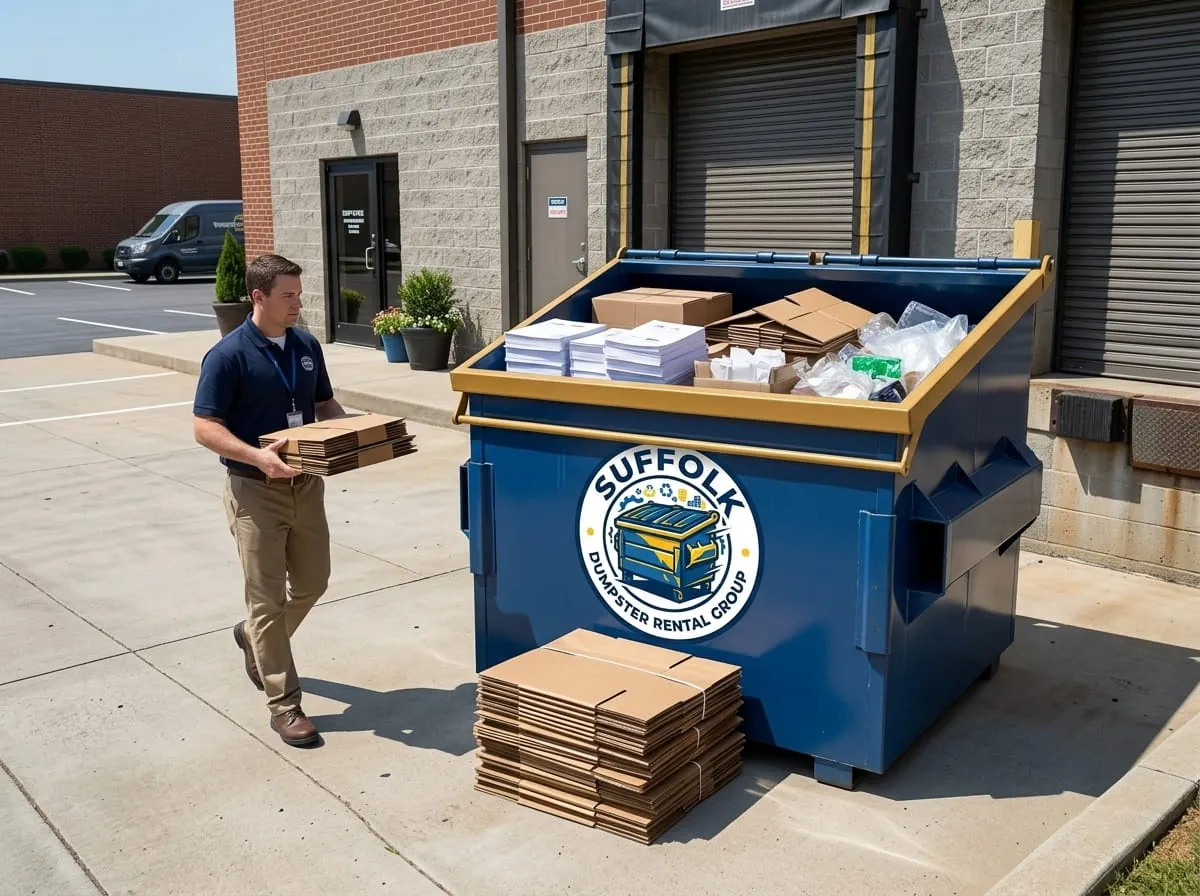
Every week somebody calls us worried about the same thing, and they are right to worry. A roll-off dumpster is a lot of concentrated weight sitting on a surface that was never designed to carry it. The container itself runs anywhere from a couple thousand pounds empty to well over ten thousand loaded, and that load does not spread out evenly. It rides on two steel rear wheels and a front tongue, and when a truck slides it off the bed, those contact points drag and press hard against whatever is underneath. On a hot Suffolk afternoon, whatever is underneath is often softer than you think.
I have been dropping boxes on driveways around Hampton Roads long enough to have seen the good outcomes and the bad ones. The good ones are boring. The bad ones involve a homeowner staring at a fresh gouge in their asphalt or a hairline crack spidering across a concrete slab that was fine the day before. Almost all of the bad ones were preventable. So let me walk you through how driveway damage actually happens and, more to the point, how you and a decent hauler keep it from happening at all.
Why a Roll-Off Is Harder on a Driveway Than a Car
Your driveway carries cars every day without complaint, so it is fair to ask why a dumpster is different. The answer is contact area and time. A car spreads its weight across four wide tires, each one pressing down over a decent patch of rubber. A roll-off does the opposite. It puts thousands of pounds onto narrow steel wheels and a metal tongue that might contact the ground over the area of a dinner plate. That is point loading, and point loading is what cracks slabs and dents asphalt.
Time matters too. Your car is parked, then it leaves. A dumpster sits in one spot for days, sometimes weeks, pressing continuously. Add a load of wet shingles or broken concrete on top and the pressure climbs. Now put all of that on a July day when the asphalt has been baking since ten in the morning. Asphalt is a petroleum product. It softens in heat. In the Tidewater summer, a black driveway surface can easily run twenty or thirty degrees hotter than the air, and soft asphalt takes an impression the way cool asphalt never would.
The Boards Trick, and Why It Actually Works
The single most effective thing anyone does to protect a driveway is also the simplest. You put wood down first. We are talking about laying planks or sheets of plywood under the rear wheels and under the tongue before the container ever touches the surface.
The reason this works comes straight back to that point-loading problem. A board spreads the load. Instead of a steel wheel pressing into one narrow line, the weight travels through the wheel into the wood and the wood distributes it across a much larger footprint. The same pounds are still there, but they are shared over more square inches, which drops the pressure at any single spot dramatically. That is the whole game: spread the weight, lower the pressure.
Here is what we actually recommend and use:
- Under the rear wheels: two-by-eights or two-by-tens, or better yet a sheet of three-quarter-inch plywood doubled up. Thin luan or a single sheet of cheap ply will crack under the load and do nothing.
- Under the tongue: this is the spot people forget, and it is the spot that does the most damage. The tongue is where the container pivots and where a lot of weight concentrates during drop-off and pickup. Put a thick block or a stack of doubled plywood there.
- Length matters: the container may shift a foot or two as it is set and as it is loaded. Longer boards give you margin. A board that only covers half the wheel is a board the wheel can roll right off of.
You do not need anything fancy. Scrap two-by material from a previous project works fine as long as it is sound and thick. If you do not have any, tell your hauler when you book. A crew that cares will bring their own.
Soft Ground, Humidity, and the Tidewater Factor
Suffolk and the rest of Hampton Roads sit on low, flat, wet ground. Our water table is high, our summers are humid, and our soil holds moisture in a way that inland clay does not. That has real consequences for anything heavy you park on the ground.
When the base under a driveway stays damp, it loses bearing strength. A slab that feels rock solid in a dry March can flex under load in a soggy August after a week of afternoon thunderstorms. The concrete or asphalt on top is only as strong as the ground supporting it, and around here that ground is often not as strong as it looks. This is why a driveway that has handled a dumpster before might crack the second time around. Conditions change with the season.
Heat and humidity work together against asphalt in particular. The surface softens, the base stays moist, and a heavy static load presses down for days. That combination is exactly how you end up with wheel ruts and depressions. If you are renting in the heart of summer, wood under the wheels is not optional in my book. It is the difference between a clean pickup and an awkward conversation.
Gravel and Shell Driveways Around Here
A lot of properties in and around Suffolk have gravel or crushed-shell driveways, and those behave differently from a paved surface. The good news is you cannot really crack loose stone. The bad news is the container wheels and tongue will dig in, push the material around, and leave ruts or a low spot where the box sat.
On gravel or shell, the fix is still boards, but for a different reason. Here the wood keeps the wheels from sinking and churning the surface, and it gives you a stable, level base so the container does not settle or lean. If the spot is soft, lay down a wider platform of plywood so the load bridges across it. After pickup you may need to rake the stone back level, which is a five-minute job rather than a repair bill.
Where to Put the Box: Placement Alternatives
Sometimes the smartest move is to keep the dumpster off the driveway entirely. Not every job needs it on the concrete, and there are usually options worth considering:
- The street or curbside: in many Suffolk neighborhoods you can place a container in the street, though this often requires a permit from the city or your HOA. Streets are built to carry heavy vehicle loads, so this is easy on your property.
- A gravel side yard or a flat grassy area: fine for lighter loads if the ground is firm and dry, again with boards down. Avoid this after heavy rain unless you enjoy tire tracks in your lawn.
- The apron or the end of the driveway: if you must use the driveway, the thicker, better-supported section near the street usually handles load better than a long thin runway up to the garage.
A good hauler will talk through these with you before the truck ever leaves the yard. Placement is a conversation, not a guess. When you set up your residential dumpster rental, tell us about your driveway, your gates, and any low branches, and we will plan the drop accordingly.
What a Careful Hauler Actually Does
Protecting your driveway is not all on you. The driver makes or breaks it. Here is what separates a crew that cares from one that just wants to dump and run:
- They walk the site first. Before backing in, a good driver looks at the surface, the slope, and where the wheels will land.
- They set the boards themselves. They do not make you do it. They know exactly where the tongue and wheels touch down.
- They ease it off the truck. Sliding a box off slowly keeps the drag light. A rushed drop is where gouges come from.
- They think about pickup, not just delivery. A loaded box on pickup day is far heavier than an empty one on delivery day. The driver plans the winch-up so the wheels roll onto the boards, not off of them.
- They pick the right size. Putting a job that needs a ten-yarder into a forty-yard box means more weight sitting on your surface than necessary.
If you want to understand the different container sizes and how they land, our roll-off dumpster rental page breaks that down. Matching the box to the job is part of protecting the driveway.
Renting soon and want it done right? Call Suffolk Dumpster Rental Group at (757) 922-0487 and tell us about your driveway. We will bring boards, place the box carefully, and treat your property like it was ours.
HOA Neighborhoods and Keeping the Peace
Plenty of Hampton Roads communities have HOAs with rules about dumpsters, and those rules are worth reading before you book. Some limit how long a container can sit. Some require it on the driveway and off the street. Some want it screened or placed out of direct view. Beyond the written rules, there is the practical matter of not leaving a mess or a stain your neighbors will remember.
A couple of habits keep things smooth. Order the shortest rental window that fits your project so the box is not a fixture. Keep the load below the rails so nothing blows into a neighbor's yard. And insist on boards, because a rust stain or an oil drip on light-colored concrete is exactly the kind of thing an HOA loves to send a letter about. A clean pickup with no marks left behind is the goal, and it is very achievable.
The Short Version
Driveway damage from a dumpster is almost always avoidable. Spread the load with thick wood under the wheels and the tongue, respect our soft Tidewater ground and summer heat, consider keeping the box off the pavement entirely, and work with a hauler who sets the container with care instead of dropping it and driving off. Do those things and your driveway will look exactly the same the day the box leaves as it did the day it arrived. If you want a straight answer about your specific property, get in touch and we will help you plan it.

Founder, Suffolk Dumpster Rental Group — sharing straight advice from more than 15 years of local hauling experience.