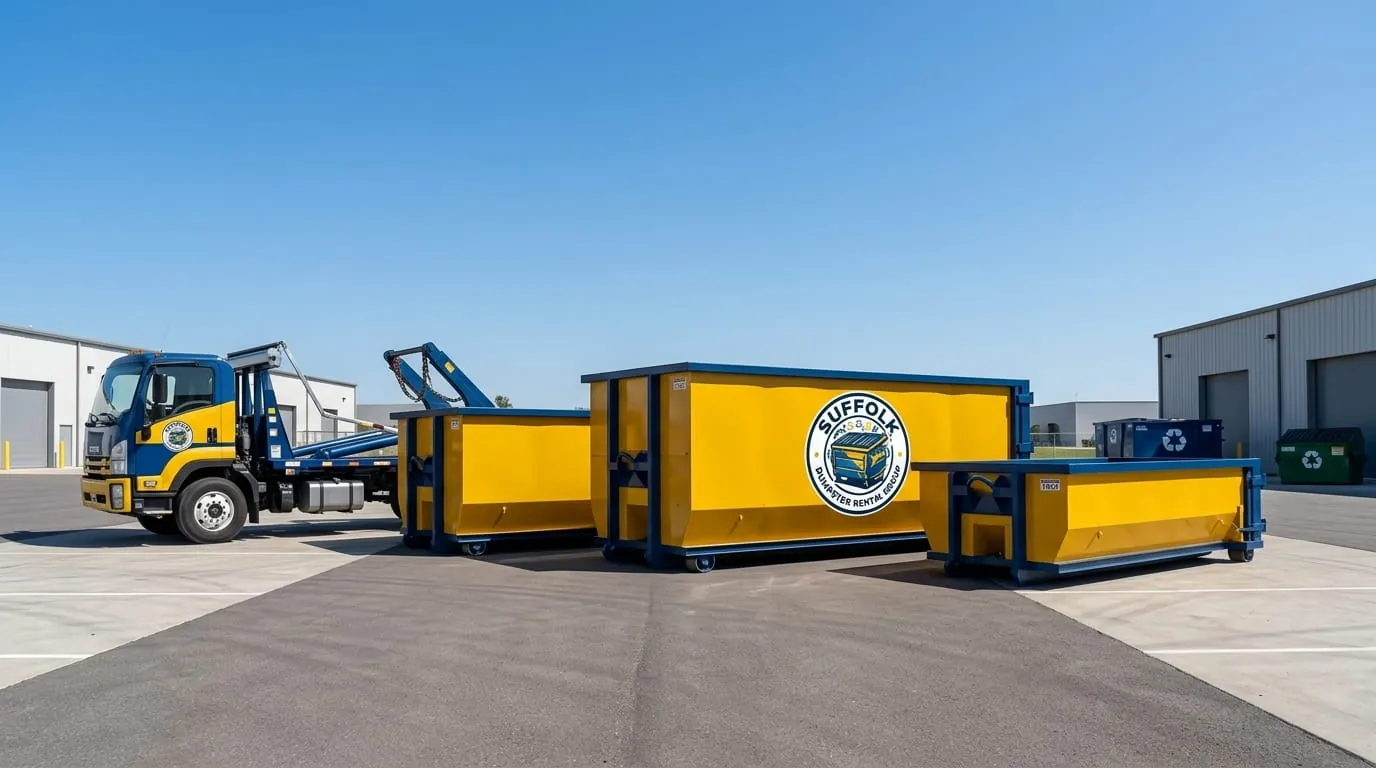
The first question almost everybody asks me when they call is some version of "what's your price for a dumpster?" It's a fair question. It's also a little like asking a contractor what a kitchen remodel costs. The honest answer is: it depends, and the people who tell you a single flat number without asking anything about your job are usually the ones whose invoices come as a surprise. So let me walk you through how pricing actually works around Suffolk and the Tidewater area, what moves the number up or down, and where folks tend to get burned.
What actually drives the price
There are five things that determine what a dumpster rental costs here, and once you understand them the quotes you get from anybody start to make a lot more sense.
1. The size of the container
This is the big one. Roll-off dumpsters are measured in cubic yards, and the common sizes you'll see in Suffolk are 10, 15, 20, 30, and 40 yards. A 10-yard dumpster holds roughly the debris from a small bathroom tear-out or a garage cleanout. A 20-yard is the workhorse for most residential projects. A 30 or 40 is for whole-house remodels, new construction, or commercial jobs.
As a rough local guide, expect something in these ranges for a standard rental period:
- 10-yard: $300 to $400
- 15-yard: $350 to $450
- 20-yard: $375 to $500
- 30-yard: $450 to $600
- 40-yard: $500 to $700
Treat those as illustrative, not gospel. Fuel prices, landfill rates, and how far you are from Suffolk proper all nudge them. But if a quote lands way below that bottom edge, your antenna should go up. Somebody is either making it up on weight overages or hasn't told you the whole story yet.
2. How long you keep it
Most rentals here come with a rental window baked in, usually somewhere between 7 and 14 days. That's plenty for the average project. If your job runs long and you need the box another week or two, there's typically a per-day charge after the included period, often in the $5 to $15 a day range. It adds up quietly, so if you know you're going to need it a month, say so up front and ask for a flat monthly rate. It's almost always cheaper than stacking daily fees.
3. Weight and tonnage
Here's where a lot of the confusion lives. Most dumpster prices include a weight allowance, measured in tons. A common setup is a couple of tons included, with an overage charge per ton after that, usually somewhere around $50 to $95 per ton depending on current landfill dumping fees.
Why does this matter? Because debris weight varies wildly. A 20-yard box full of couch cushions and drywall might come in under two tons. That same box packed with wet carpet, plaster, or dirt can blow past four tons fast. The container isn't full, but it's heavy, and heavy is what the landfill charges for. This is the single most common reason a bill ends up higher than the person expected.
4. What you're throwing away
Debris type affects price two ways. First, some materials are heavy by nature, concrete, brick, dirt, roofing shingles, and those often need a dedicated smaller container with its own pricing because a full 20-yard of concrete would be too heavy to legally haul. Second, certain items are flat-out restricted or cost extra: tires, mattresses, appliances with freon, paint, chemicals, and electronics usually carry special handling fees or have to go somewhere else entirely. Tell whoever you rent from exactly what's going in the box. It's not a test, it's how we route it to the right facility and keep your cost accurate.
5. Permits, if you need one
If the dumpster sits on your own driveway or property, no permit. If it has to go on a public street or in the right-of-way, the City of Suffolk may require a permit, and there can be a fee attached. Most of the time we can set the container on your property and skip this altogether. When we can't, we'll tell you before it becomes a line item you didn't expect.
If you'd rather just talk it through with a person who knows the local landfill rates and permit rules, call us at (757) 922-0487. We'll ask a few questions about your project and give you a real out-the-door number, not a teaser rate. No games, no runaround.
Flat-rate versus variable pricing
You'll run into two billing models, and knowing the difference protects your wallet.
Flat-rate pricing bundles the container, delivery, pickup, a set rental period, a defined weight allowance, and landfill disposal into one number. You know what you owe before the truck leaves the yard. The only way the price changes is if you go over the weight limit or keep it past the included days, and both of those are disclosed up front.
Variable pricing quotes you a low delivery number and then bills weight, disposal, and fuel separately after the fact. On paper the starting figure looks great. In practice you don't know your total until the invoice shows up, and that's exactly when people feel misled. Neither model is dishonest by itself, but flat-rate is a lot easier to plan around, and it's what we default to for most residential roll-off dumpster rentals.
The fees that catch people off guard
Beyond the base rate, here are the extras worth asking about before you book anything, with anybody:
- Overage weight charges when you exceed the included tonnage
- Extended rental fees for each day past the included window
- Trip or dry-run fees if the truck arrives and can't reach the container because of a parked car or a blocked driveway
- Prohibited item fees for restricted materials found in the load
- Fuel or environmental surcharges tacked on separately by some companies
- Overfilling fees if debris is piled above the rim, since we legally can't haul a box loaded over the top
None of these are exotic. They're standard across the industry. The difference between a good company and a frustrating one is whether they tell you about them on the front end.
How to actually save money
After years of doing this around Hampton Roads, here's where I see people leave money on the table, and how to avoid it.
Pick the right size the first time
Renting a box that's too small means a second haul, and a second delivery fee wipes out any savings. Renting one that's way too big means you're paying for air. When you're genuinely between sizes, going one size up is usually cheaper than risking a second container. When in doubt, describe your project to us and we'll size it for you.
Keep the heavy stuff separate
If you've got concrete, dirt, or brick, don't bury it in a mixed load. Ask about a dedicated heavy-debris container. It sounds like an extra step, but it keeps your main dumpster under its weight limit and avoids ugly overage charges.
Break down and load smart
Flatten boxes, break down furniture, and load evenly. You'd be amazed how much more fits when things are stacked instead of tossed. More capacity used means less chance you need a second box.
Book a few days ahead
Same-day and next-day delivery is doable, but planning ahead gives you the pick of sizes and delivery windows, and it gives you time to compare honest quotes instead of grabbing the first one out of desperation.
Be honest about what's going in
The fastest way to a surprise bill is under-describing your debris. Tell us it's a roofing job, or that there's an old fridge, or that half of it is soil. Accurate information in means an accurate price out.
Why the cheapest quote sometimes costs the most
I'll be blunt about this because it's the part that matters. The lowest number on your screen is not always the lowest number on your invoice. A company can advertise a rock-bottom delivery price and make it all back, and then some, on weight overages, short rental windows, fuel surcharges, and fees for things a straightforward operator would have just included.
What you actually want to compare is the total delivered cost for your specific job: container, delivery, pickup, disposal, a rental period that fits your timeline, and a weight allowance that fits your debris. When you line quotes up that way, the "cheap" one often isn't. A slightly higher flat rate with everything included and no asterisks usually beats a teaser price every time, and you sleep better not wondering what the final bill will say.
That's the whole game: match the container to the work, understand what's included, and deal with people who tell you the real number the first time. If you want that kind of quote for a project here in Suffolk or anywhere in the Tidewater region, reach out through our contact page or just pick up the phone. We've hauled about every kind of load this area can produce, and we'd rather size it right than sell you the wrong box.

Founder, Suffolk Dumpster Rental Group — sharing straight advice from more than 15 years of local hauling experience.