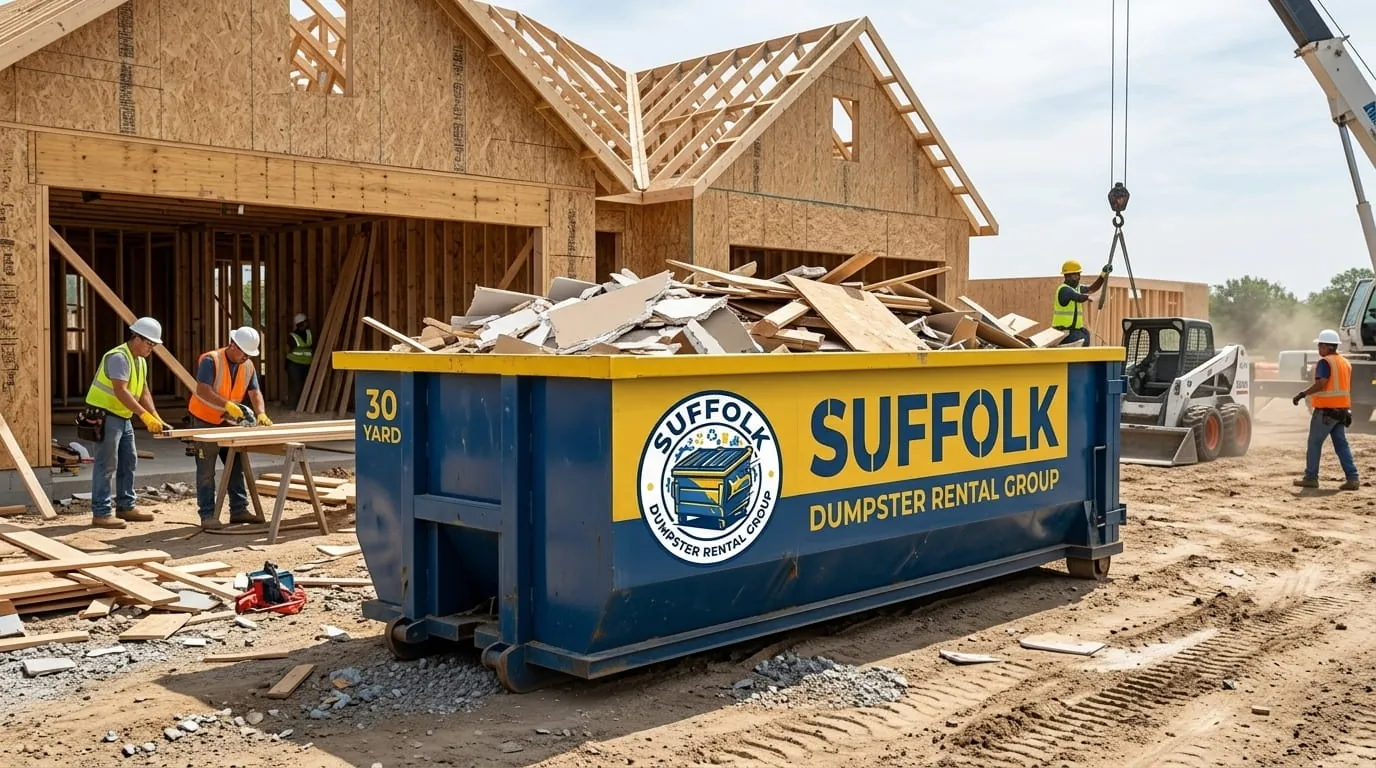
A roof tear-off looks simple from the driveway. You strip the old shingles, load the trailer or the container, and start dry-in. But the part that trips up homeowners and even a few newer contractors is weight. Roofing debris is some of the heaviest material we haul in Suffolk, and getting the container size wrong turns a one-day job into a scheduling headache. This is the math and the field logic behind picking the right dumpster for a shingle tear-off.
Why roofing debris is so much heavier than it looks
Asphalt shingles are basically a fiberglass or felt mat soaked in asphalt and coated in mineral granules. That asphalt is dead weight. A pile of shingles that would barely fill a corner of the container can still bury a scale, because unlike bulky junk-out debris that fills the box with air, shingles pack down dense and flat.
Roofers measure roof area in squares. One square equals 100 square feet of roof surface. Standard three-tab and architectural shingles are sold and installed in bundles, and it takes roughly three bundles to cover a square. Here is where the weight adds up.
- A bundle of three-tab shingles weighs roughly 60 to 70 pounds.
- A bundle of architectural (dimensional) shingles runs closer to 65 to 80 pounds.
- That puts a single square of tear-off at about 200 to 250 pounds for one layer.
Now scale it. A modest 20-square roof, single layer, is roughly 2 tons of debris before you count felt, nails, drip edge, or the wood you swap out on rotten decking. A larger 30-square roof pushes 3 tons. And that is the clean number for one layer of asphalt. It climbs fast the moment you find a second layer underneath.
The shingle weight math, laid out
Keep it simple with a rule of thumb we use when a customer calls for a quote: figure about one ton of debris for every 8 to 10 squares of single-layer asphalt. That builds in a little margin for underlayment and fasteners. Run a few common jobs through it:
- 15 squares, single layer: roughly 1.5 to 2 tons.
- 20 squares, single layer: roughly 2 to 2.5 tons.
- 25 squares, single layer: roughly 2.5 to 3 tons.
- 20 squares, two layers: roughly 4 to 5 tons.
Those tonnage figures matter because roofing dumpsters are almost always rented with a weight allowance, not just a volume. You can have space left in the box and still be over on weight. That is the single most common surprise on a roofing rental, and it is completely avoidable if you count squares before you call.
Single layer versus multi-layer tear-offs
Older Suffolk and Hampton Roads homes love to hide a second roof. Code today generally caps a structure at two layers of asphalt before a full tear-off is required, but plenty of houses got a lazy overlay years ago, and you do not always know until the first row comes up. That second layer is not a minor add-on. It roughly doubles the debris weight for the same roof footprint.
If you are pulling permits and you already know the home has two layers, plan for it up front. Do not size the container for the roof area you see; size it for the tonnage you are about to remove. When we take a tear-off call, the first two questions are always how many squares and how many layers, because those two numbers decide everything about the container and the swap schedule.
One more thing on multi-layer jobs: the bottom layer is often the original organic-felt shingle, which soaks up moisture and gets even heavier. If it rained the week before, that old layer is holding water. Weight goes up again.
Why 10 to 15 yards is the sweet spot
People instinctively want a giant container for a roof, figuring bigger is safer. For shingles, that logic backfires. Because roofing debris is so dense, a 20 or 30 yard box hits its weight limit long before it fills up, and now you are paying to haul mostly empty air on a container that is a pain to place. You also risk overloading it to a point where it cannot legally or safely be transported.
For the vast majority of residential tear-offs, a 10 to 15 yard dumpster is the right tool. A 10 yard box handles the average single-layer roof in the 15 to 20 square range comfortably. Step up to a 15-yard dumpster when you have a larger roof, a known second layer, or you would rather load once and not worry about topping out. These smaller containers also sit lower, which means shorter tosses off the roof and less strain on your crew across a long day.
We build these out specifically for shingle work. If you want the container matched to your square count and layer situation before you commit, our roofing dumpster rental service is set up for exactly that conversation.
Storm and hurricane roof damage on the coast
Living in Hampton Roads means living with the tropics every late summer and fall. Nor'easters, tropical storms, and the occasional hurricane strip shingles, drive water under the felt, and lift ridge caps. After a big blow, we see two kinds of roofing debris jobs, and they size differently.
- Repair and partial replacement: a section of blown-off shingles, some damaged decking, maybe a chimney flashing rebuild. A 10 yard box is usually plenty, and it keeps the driveway footprint small while other trades work around you.
- Full storm-driven replacement: the insurance adjuster totals the roof and you are doing a complete tear-off. Now you are back to the square-and-layer math above, plus whatever wet, rotten decking the storm exposed.
Storm season also means demand spikes. After a named storm rolls through, every roofer in Suffolk is calling for containers the same week. If you are a contractor working a storm queue, book your containers early and stack your swaps, because availability tightens fast when the whole region is re-roofing at once.
Not sure which size fits your tear-off? Call Suffolk Dumpster Rental Group at (757) 922-0487 and give us your square count and layer situation. We will size it right the first time and get it on your driveway when your crew shows up.
Driveway placement that actually works for roofers
Placement is where a roofing job either flows or fights you. The goal is a short, clean throw from the roof edge to the container, without blocking the crew, the ladder, or your material staging. A few things we have learned dropping thousands of these boxes:
- Put the box on the side you are stripping first. You can reposition your own tarps, but you cannot move a loaded container. Set it where the bulk of the debris will fall.
- Protect the driveway. We can lay boards under the wheels and the rear rollers. Concrete handles it fine; some crews still like a couple of planks for peace of mind, and it keeps the container from marking a fresh sealcoat.
- Leave the door end clear. The rear barn doors let you walk debris in instead of heaving everything over the top wall. On a long day that saves your crew's shoulders. Do not park a truck or stack pallets against the door.
- Mind the drop clearance. We need overhead room to raise the truck bed and roll the box off. Watch for low branches, carports, and power service lines running to the house.
- Think about the tarp and the ground crew. If you are ground-tarping and shoveling into the box, the container wants to be at the edge of the tarp, not across the yard from it.
On tight lots or homes with no usable driveway, we can talk through street placement, but that sometimes needs a permit from the city depending on where you are in Suffolk. Bring it up when you book so there are no surprises the morning of.
Scheduling swaps on bigger jobs
Once a roof gets past roughly 30 squares, or you are running a multi-layer tear-off, one container often is not enough capacity in a single drop, and you do not want your crew standing around because the box is full. That is where a swap schedule earns its keep.
A swap is simple: we haul the full container off and set an empty one in the same spot, ideally same day. The trick is timing it to your production. If your crew strips a 40-square roof in a day and a half, we plan the swap for the point where the first box tops out, so the roof never stops coming off. Tell us your crew size and your target strip pace and we will map the drops to it.
For a phased project, or a contractor running several roofs at once, we can also stage multiple containers across sites and keep them rotating. The point is that the container never becomes the bottleneck. A tear-off has a rhythm, and the debris haul should match it, not interrupt it.
The short version
Count your squares. Count your layers. Figure about a ton for every 8 to 10 squares of single-layer asphalt, then double it for a second layer. For most Suffolk homes that lands you on a 10 or 15 yard container, not a giant box you will never fill by volume. Place it on the side you are stripping first with the doors clear, and if the roof is big, line up your swaps before you start so the job never stalls. Get those pieces right and the dumpster is the easiest part of the whole tear-off.

Founder, Suffolk Dumpster Rental Group — sharing straight advice from more than 15 years of local hauling experience.