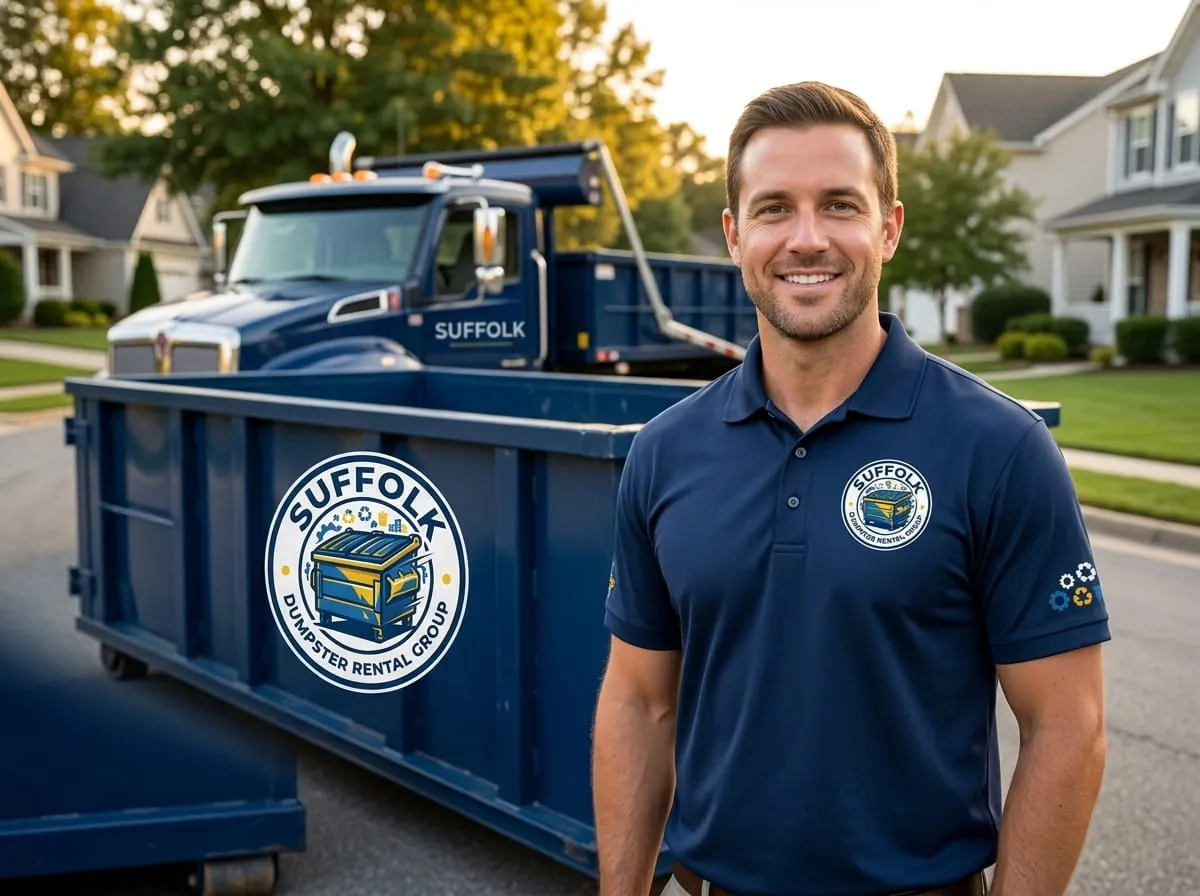
After enough years hauling roll-offs around Suffolk and the rest of Hampton Roads, you learn that most people book a dumpster with a simple question in their head: will it all fit? That's the wrong question. The one that actually matters is what's allowed to go in it. A can that's packed right but full of the wrong stuff gets flagged at the transfer station, and then you're the one paying a special handling fee or, worse, getting the whole load turned away.
So let's walk through it the way I'd explain it if you called the yard. What goes in, what stays out, why the rules are what they are, and where to take the things we can't legally haul. No fluff.
What You Can Throw In
The good news is that the vast majority of what people are cleaning out is completely fine. A roll-off is built for bulk, mixed debris, and that covers a lot of ground.
Household junk and general clutter
Garage cleanouts, attic junk, closets full of stuff nobody's touched since the Clinton administration — all of it is fair game. Boxes, packing material, old toys, clothing, kitchenware, books, small non-electronic odds and ends. If you're doing a whole-house purge and the volume is getting away from you, a roll-off beats a dozen trips to the curb. This is bread-and-butter work for us and for any junk removal job.
Construction and demolition debris
This is what roll-offs were invented for. Drywall, lumber, framing, subfloor, roofing shingles, siding, plaster, tile, cabinetry, countertops, trim. Broken-up concrete, brick, and asphalt are usually fine too, but call first — that material is heavy, and most heavy inert debris goes in a dedicated container with a weight-based arrangement so you don't blow past the road-legal limit. A 20-yard can filled with concrete can outweigh the truck's ability to haul it safely.
Furniture
Couches, recliners, mattresses, box springs, dressers, tables, chairs, desks. Upholstered furniture is fine in most roll-offs, though a few facilities treat mattresses as a separately-counted item. If you've got a pile of them, mention it when you book so we can flag it up front. For a straightforward home turnover, a residential dumpster rental handles furniture without a second thought.
Yard waste
Branches, brush, leaves, shrubs, sod, small stumps. Storm cleanup after a good Hampton Roads nor'easter is a classic yard-waste load. One thing to know: some facilities want yard debris kept separate from mixed trash because clean vegetative material can be composted or ground into mulch instead of buried. If your job is mostly limbs and brush, tell us, because a clean green load sometimes tips cheaper.
What Cannot Go In — And This Part Is Not Negotiable
Here's where people get tripped up. The prohibited list isn't us being difficult. It's federal and state law, landfill permits, and worker safety all stacked together. When a banned item shows up at the scale, the facility can reject the entire load, not just the one item. That turns a routine dump into a mess, and the fees roll downhill.
Hazardous waste of any kind
Anything corrosive, flammable, toxic, or reactive stays out. That means solvents, pool chemicals, pesticides, herbicides, motor oil, gasoline, antifreeze, propane tanks, and cleaning chemicals. Landfills are permitted for solid municipal and construction waste, not chemical disposal. A leaking container of the wrong thing can contaminate groundwater and put the people sorting the load at real risk.
Paint and liquids
Wet paint, stains, and lacquers are a no. Liquids in general don't belong in a roll-off — they leak, they add weight, and they turn a load into a hazard. Here's the workaround that trips people up every time: fully dried latex paint is often treated as regular trash. Pop the lids, let the cans harden in the sun (or stir in some kitty litter or a paint hardener to speed it up), and once it's solid it can usually go in. Oil-based paint is a different animal and stays on the hazardous list.
Tires
Tires are banned from landfills across Virginia, full stop. They trap methane, float to the surface of a buried cell, and are a fire risk. They're also a mosquito breeding ground, which the state takes seriously. Tire retailers and dedicated recyclers take them, usually for a small per-tire fee.
Batteries
Car batteries, lithium-ion packs, and the rest don't go in the can. Lithium batteries in particular are a genuine fire hazard — a crushed one in a compactor or a hot landfill cell can ignite, and those fires are ugly. Auto parts stores take lead-acid car batteries, often with a core credit.
Appliances with Freon
Refrigerators, freezers, air conditioners, dehumidifiers, and heat pumps contain refrigerant that has to be professionally recovered before the unit can be scrapped. Venting Freon is a violation of the federal Clean Air Act. If the refrigerant is certified as removed and tagged, some facilities will take the shell — but that has to happen first, by someone licensed to do it.
Electronics
TVs, monitors, computers, printers. Virginia discourages e-waste in landfills because the boards contain lead, mercury, and other heavy metals, and much of it is recyclable. Old CRT tube TVs are the worst offenders. These belong at an electronics recycling drop-off, not in the roll-off.
A few other common surprises
- Asbestos — anything you suspect contains it (old floor tile, pipe insulation, some popcorn ceilings) requires licensed abatement. Never toss it loose.
- Medical waste — sharps, needles, and biohazard material.
- Fluorescent tubes and CFL bulbs — they contain mercury.
- Whole cars, engine blocks, and large fuel-holding equipment.
- Railroad ties — they're soaked in creosote, which is regulated.
Why the Rules Exist in the First Place
It's easy to read a prohibited list and assume it's arbitrary. It isn't. A modern landfill is an engineered system with a liner, a leachate collection layer, and gas capture. Everything about it is designed around one assumption: what goes in is inert solid waste that will sit there predictably for decades. Introduce chemicals, refrigerants, or battery acid and you compromise the liner, poison the leachate, or start a fire underground that can smolder for months.
Then there's the human side. Real people handle this material — drivers, sorters, spotters at the tipping floor. A hidden propane tank or a container of pool acid is a threat to them long before it's an environmental problem. The rules protect the crew as much as the water table.
Virginia's Rules, at a High Level
Virginia regulates solid waste through the Department of Environmental Quality, and every permitted landfill operates under conditions that spell out exactly what it can accept. The bans you run into most — tires, whole appliances with refrigerant, hazardous liquids, and e-waste — line up with both state policy and federal law. You don't need to memorize the code sections. Just know that when we say something can't go in, there's a permit and a statute behind it, not a preference.
Hampton Roads has its own regional layer on top of that. The Southeastern Public Service Authority (SPSA) manages solid waste disposal for Suffolk and the surrounding communities, and it operates the transfer and disposal infrastructure a lot of local waste flows through. That's a good thing for you, because it means there are established, legitimate channels for the stuff that can't go in a roll-off.
Mid-Article: Not Sure Where a Certain Item Falls?
Don't guess and hope it slides through — a rejected load costs you more than a phone call. Call Suffolk Dumpster Rental Group at (757) 922-0487 and tell us what you're clearing out. We'll tell you straight what fits in the can and what needs to go somewhere else, before the truck ever shows up.
Where to Take the Prohibited Stuff Locally
Getting told "you can't put that in" is only half an answer. Here's the other half — how folks in Suffolk actually get rid of the banned items.
SPSA and city convenience/transfer sites
SPSA operates transfer stations and convenience centers across the region, and the City of Suffolk provides residents disposal options for household waste and certain bulky or special items. These sites are set up to route material to the right place — recycling, special handling, or proper disposal — instead of burying everything. Hours, accepted items, and any fees vary by location and can change, so check the current City of Suffolk and SPSA information before you load up the truck. It saves a wasted trip.
Household hazardous waste events
The region periodically runs household hazardous waste collection days where you can drop off paint, chemicals, pesticides, and similar items free or cheap. If you've got a shelf of half-used chemicals in the garage, hold them for one of these instead of sneaking them into a dumpster.
Item-specific channels
- Tires — the shop that sells you new ones, or a tire recycler, for a small fee.
- Car batteries — auto parts stores, usually with a core credit back in your pocket.
- Refrigerators, freezers, AC units — a licensed appliance recycler or scrapper who recovers the refrigerant first. Some retailers haul the old one when they deliver the new one.
- Electronics — regional e-waste recycling drop-offs and periodic collection events.
- Fluorescent tubes — many hardware stores take them back.
A Few Habits That Keep Your Load Clean
The people who never have a problem tend to do the same handful of things. They sort as they load instead of throwing everything in a heap. They set anything questionable off to the side and ask before it goes in. They drain and dry anything that held liquid. And they mention heavy inert material — concrete, brick, dirt, roofing — when they book, so we bring the right can and set the right weight expectation.
Do that, and the dumpster does exactly what it's supposed to: makes a big job disappear without a single surprise on the back end. If you're planning a cleanout, a remodel, or a move and you want a straight answer about what fits and what doesn't, reach out and we'll get you sorted.

Founder, Suffolk Dumpster Rental Group — sharing straight advice from more than 15 years of local hauling experience.