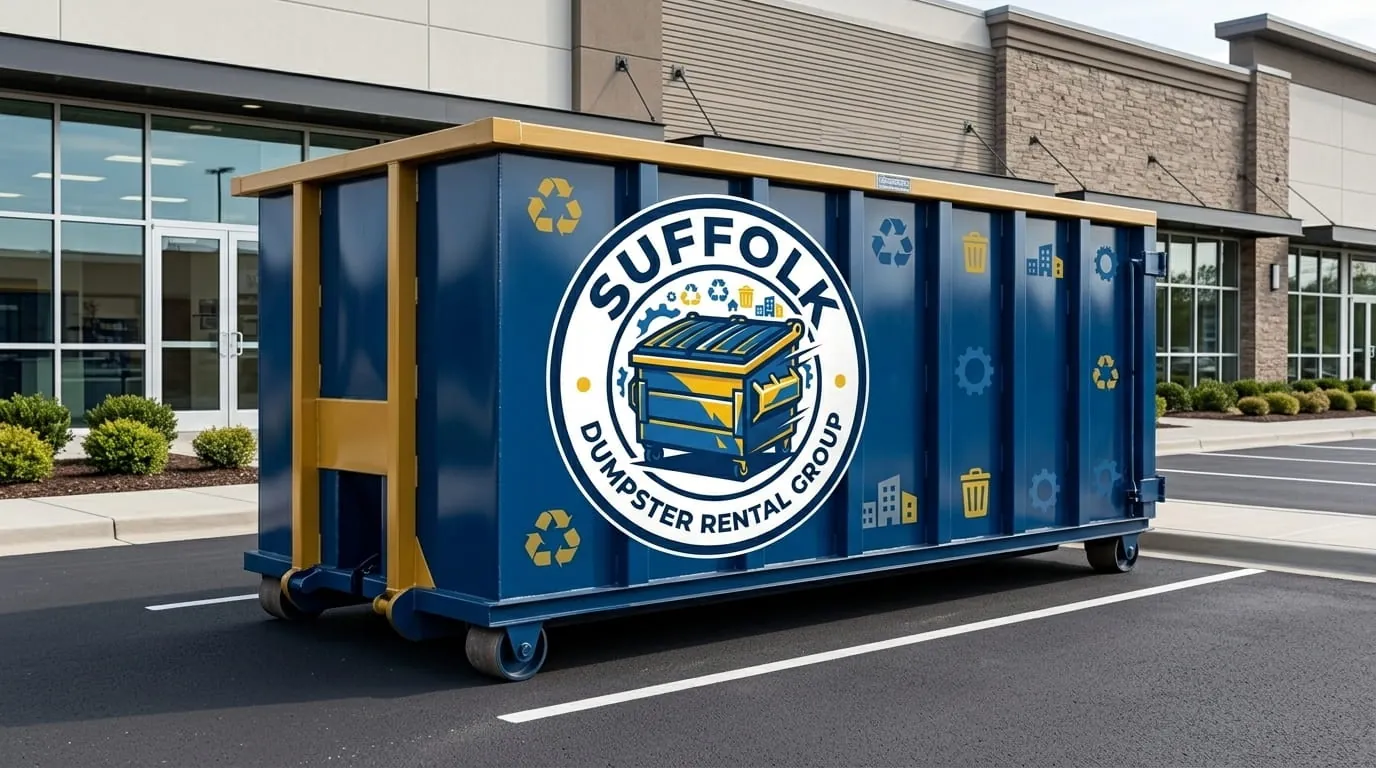
The question we get more than any other, hands down, is some version of "how big a dumpster do I need?" And it's a fair question, because guessing wrong costs you money either way. Rent one too small and you're calling for a second haul or a swap-out. Rent one too big and you've paid for air you never filled. After years of dropping roll-offs in driveways from North Suffolk down through Chuckatuck and out toward the Bennett's Creek side, I can tell you the right answer almost never comes from a chart alone. It comes from knowing what you're throwing away and, just as important, how much it weighs.
So let's walk through it the way I'd talk you through it on the phone. We'll cover the four sizes we run most, the projects each one actually suits, and the thing most guides skip entirely: weight. Because out here in Tidewater, weight is where people get surprised.
The Four Sizes, In Plain Terms
A roll-off is measured in cubic yards, which is just volume. A 20 yard box holds 20 cubic yards of material. Simple enough. What trips people up is that the number tells you nothing about how heavy your load can be before you blow past the included tonnage. Hold that thought, we'll get there.
10 Yard: The Small, Heavy Hauler
A 10 yard is a low, stubby box, usually around 12 to 14 feet long and only about 3.5 feet tall. Don't let the small footprint fool you. This is the size I recommend for dense, heavy material more than for bulky stuff. Think a single-layer roof tear-off, a concrete patio removal, a bathroom gut, or a small pile of dirt. The low walls mean you can pitch heavy debris over the side instead of hauling it up a ramp, and the short length fits tight driveways in older Suffolk neighborhoods where you don't have a lot of room.
Where the 10 yard shines is exactly where a bigger box would get you in trouble on weight. If you filled a 30 yard with wet concrete, the truck couldn't legally carry it. A 10 keeps you honest.
15 Yard: The In-Between That Solves Real Problems
The 15 yard is the one a lot of companies skip, and I think that's a mistake. It's the sweet spot for the mid-size job that's too much for a 10 but doesn't need a 20. A good chunk of garage cleanouts, a deck removal, a mid-size flooring job, a two-layer roof on a smaller ranch. You get more volume than the 10 with walls that are still manageable, and the weight allowance is usually generous enough that you're not sweating every load of shingles.
20 Yard: The Everyday Workhorse
If I had to put one box on every driveway, it'd be the 20. It handles the widest range of jobs of anything we run. Roughly 22 feet long and 4.5 feet tall, it swallows furniture, drywall, cabinets, framing lumber, and general renovation debris without you playing Tetris the whole time. Most full-room remodels, big garage and basement cleanouts, and mid-size landscaping projects land right in this range. If you want to read the full spec and typical price, we keep a page on the 20 yard dumpster that lays it out.
30 Yard: For the Big, Bulky Tear-Downs
The 30 yard is a big box, around 22 feet long but a full 6 feet tall, and it's built for volume, not weight. This is your whole-home renovation, large estate cleanout, new-construction debris, or a major storm cleanup. The tall walls mean you're loading up and over, so a load ramp or just a strong back helps. The key thing to understand: a 30 is for light, bulky material. Fill it with anything dense and you'll hit the weight cap long before the box looks full.
Now The Part Everyone Underestimates: Weight
Volume gets you in the door. Weight is what actually determines whether you picked right. Every roll-off rental includes a tonnage allowance. Go over it and there's a per-ton overage, because the landfill charges by the scale ticket and the truck has legal road limits it can't cross no matter what.
Here's the rough math I run in my head. Roofing shingles run about 250 to 400 pounds per square (a 10-by-10 area). A single-layer tear-off on a 2,000 square foot roof is easily 4 to 6 tons. Concrete and asphalt are brutally heavy, around 4,000 pounds per cubic yard, which is why we cap those in the 10 yard. Drywall, wood, and general household junk are far lighter, which is what makes the 20 and 30 practical for renovation and cleanout work.
And this is where Suffolk and the wider Hampton Roads area throw a real curveball.
The Tidewater Weight Trap
We sit in a low, wet, coastal region. Materials here hold water in a way they don't in drier parts of the country, and that changes the weight math fast. A pile of yard debris that's been rained on, waterlogged carpet from a flooded crawlspace, soggy drywall after a burst pipe, storm-downed limbs still full of sap and moisture, all of it weighs dramatically more than the dry version. I've seen a 20 yard of "just some branches and old fence boards" from a nor'easter cleanup tip the scale like it was packed with roofing.
Storm season is the sharpest example. After a hurricane or a good coastal soaker rolls through Tidewater, folks fill boxes with saturated debris, ruined furniture that sat in floodwater, and wet building materials. That load can weigh two to three times what the same volume of dry material would. If you're doing storm cleanup, tell us that up front, and we'll often steer you toward a smaller box with more weight headroom rather than the biggest one on the lot. Counterintuitive, but it saves you the overage.
Matching The Box To The Job
Garage Cleanout
A single-car garage packed with the usual, old paint cans, busted lawn gear, boxes of who-knows-what, bikes nobody rides, usually fits a 15 yard comfortably. A big two or three-car garage with furniture and appliances mixed in, go 20. The material is bulky but light, so you're rarely fighting weight here. This is bread-and-butter residential dumpster rental work.
Bathroom Remodel
A single bathroom gut, tile, tub, vanity, drywall, subfloor, is a 10 yard job almost every time. The volume is small but the tile, cast iron, and old plaster are heavy, so the low box with the tighter weight profile is exactly right. Doing two bathrooms at once, step up to a 15.
Roof Tear-Off
This is all about weight, not volume. A single-layer tear-off on an average Suffolk home fits a 10 yard, and I'd rather see you in a 10 than a 20 for shingles, because the smaller box keeps the load under the truck's legal limit. Two layers or a larger roof, a 15. Never put a shingle load in a 30 thinking bigger is safer. It's the opposite.
Whole-Home Renovation
Gutting a house down to the studs, flooring, cabinets, fixtures, drywall throughout, that's 30 yard territory, and sometimes two pulls of a 20 spread across the project so you're not paying for an idle box. The debris is mostly light and bulky, which is exactly what the 30 is built for.
Estate Cleanout
Clearing out a full house of furniture, belongings, and years of accumulation usually calls for a 20 or a 30 depending on the size of the home and how full it is. These loads are light per cubic yard, so you can pack a big box without weight worries. A packed-to-the-rafters older home in downtown Suffolk might need the 30, or a 20 with a swap.
Still not sure which way to lean? That's a two-minute phone call. Describe your project to us, tell us roughly what's going in the box, and we'll tell you straight which size fits and what it runs. Call Suffolk Dumpster Rental Group at (757) 922-0487 and we'll size it right the first time, no upsell, because a second haul is a headache for both of us.
How To Avoid Renting Wrong
A few habits keep people out of trouble. First, describe your material honestly, not just your project name. "Bathroom remodel" tells me less than "tile, an old cast iron tub, and plaster walls," and the second version is what lets me size the weight. Second, when you're genuinely between two sizes, go up on volume only if the material is light and bulky, and stay down if it's heavy. Third, factor moisture, especially here. If it's been raining, or the material's been sitting outside, or it came out of a crawlspace, assume it's heavier than it looks.
One more thing on placement. A 30 needs real room to be dropped and picked up, roughly 60 feet of clearance and a solid surface. Tight lots, low branches, or a soft yard after a wet week can rule out the biggest box regardless of your debris. We'll always ask about the drop spot before we roll out, and if you're unsure, our contact page has everything you need to reach us.
The Short Version
Ten yard for heavy and dense, roofing, concrete, single bathrooms. Fifteen for the mid-size cleanout or job that outgrew the ten. Twenty for the everyday remodel and big cleanout, the one that fits most driveways and most projects. Thirty for the big, bulky, light-material jobs like whole-home gut renovations and full estate cleanouts. And through all of it, in this wet corner of Virginia, respect the weight. The box that looks right by volume can still burn you if you forget how heavy wet Tidewater debris really is. Get that part right and the rest takes care of itself.

Founder, Suffolk Dumpster Rental Group — sharing straight advice from more than 15 years of local hauling experience.